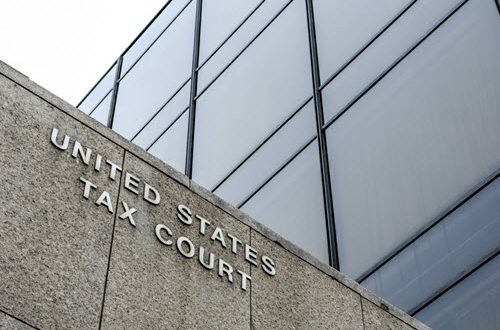
In this case, the issues before the trial court were: 1) whether Plaintiff was an independent contractor or employee, 2) whether Plaintiff acted in good faith, and 3) the computation of damages. On appeal, the court discussed the standard of review for employment classification and damages.
Jarod Kintz, a somewhat famous humorist and self-published author, once said, “Most employees are like interchangeable machine parts. When they show up to work, there is no trace of the person they replaced, and then they leave, they make no lasting impression and it’s as if they were never there.” He was probably joking, but this philosophy may be why so many employers insist on mischaracterizing employees as independent contractors. The costs of mischaracterizing employees under the Fair Labor Standards Act (FLSA) are steep as one employer discovered in Chavez-Deremer v. Medical Staffing of America, LLC, 2025 U.S. App. LEXIS 17726, 2025 LX 208477 (4th Cir. July 17, 2025).
Background
Founded in 2015, Medical Staffing of America, LLC, d/b/a Steadfast Medical Staffing, along with its owner and executive officer Lisa Ann Pitts (collectively “Steadfast” or “Defendants”), provides nursing staff, including certified nurse assistants, licensed nurse practitioners and registered nurses for its clients, a wide variety of healthcare businesses, including assisted living facilities, nursing homes, hospitals, physician offices, and medical clinics in the Richmond, Virginia area.
To satisfy the varying needs of its client healthcare organizations, Steadfast maintains a “registry” of nursing professionals. A nurse seeking to be listed on the registry completed an “application for employment.” The application, which referred to Steadfast as the “employer” and the applicant as the “employee,” sought information about the applicant’s credentials, skills, and employment history. Then Steadfast, at its own expense, conducted certain “pre-hiring requirements,” including a background investigation, a drug screening, a tuberculosis test, and a license verification.
Nurses, having successfully completed the application and pre-hiring procedures, entered what Steadfast called its “independent contractor agreement,” which provided:
Commencing from the first date of the [nurse’s] engagement by [Steadfast] and continuing from [sic] a period of twelve (12) months from the effective date of expiration or termination of this Agreement, [the nurse] agrees that [the nurse] shall not directly provide that [sic] type of services provided to [Steadfast] to any competitors of [Steadfast] without first obtaining the express written permission of [Steadfast]. [The nurse also] agrees that during the term of this Agreement and for twelve (12) months thereafter, [the nurse] will not enter into, be engaged in, or be interested in any capacity whatsoever, directly or indirectly in any business or undertaking which competes with that of [Steadfast].[1]
Being listed on Steadfast’s registry resulted in the nurse being notified of available “shift opportunities” at Steadfast client facilities for which they qualified. The client facilities would inform Steadfast of the shifts they needed to fill and the required skills and/or certifications but had no access to Steadfast’s registry or say which nurse would fill any shift.
Once the client’s needs were met, Steadfast notified qualifying individuals of the shift opportunity by telephone, e-mail, text, or through Steadfast’s proprietary mobile app. Once the nurse accepted a shift, they would be advised of the reporting time and location. If there were any disruption to the nurse’s ability to complete the shift (for example illness or emergency time off needs), the nurse needed to advise Steadfast, not the client healthcare facility. Further, while at a client facility, nurses were required to wear an identification badge that noted they worked for Steadfast. While client physicians provided immediate supervision of the nurses’ tasks, they were obligated to abide by Steadfast’s written procedures and standards covering everything from attire to punctuality to timekeeping requirements.
Although Steadfast requested that its client facilities provide feedback concerning each nurse’s performance, those facilities were contractually barred from disciplining the Steadfast nurses. Client facilities were required to contact Steadfast regarding problems with its nurses. Steadfast would then address a disciplinary matter, including punishment for unprofessional conduct, declining or cancelling shifts, working for competitors, and discussing compensation with coworkers or the client’s staff.
Steadfast dictated pay rates to its nurses, billing a flat rate to the client and paying a portion of the hourly rate to the individual nurse working the shift. Steadfast did not require a minimum number of hours from its nurses, nor guarantee them with a minimum number of available shifts. In other words, Steadfast paid their nurses a flat hourly rate regardless of the number of hours worked.[2] Steadfast required nurses to submit timesheets from which Steadfast paid them. Those time sheets formed the basis for Steadfast’s billing to the client facility. Steadfast paid nurses from its own bank accounts and, if a client facility failed to pay Steadfast, the company paid the nurse, nonetheless. Steadfast also maintained workers’ compensation and general liability insurance on the nurses it assigned to client facilities, assuming responsibility for the work those nurses performed.
In 2017, the Department of Labor (DoL) began an investigation into Steadfast’s business practices to determine if Defendants were complying with the FLSA. Based on that investigation, DoL concluded that Steadfast misclassified its nurses as independent contractors when they were, in fact, employees. Steadfast had violated the Act by failing to pay overtime that was required for all of the nurses that had worked more than 40 hours in a week. After being notified of the violation, Steadfast was given an opportunity to correct its procedures, but it elected to continue paying straight time regardless of the number of hours worked.
On May 2, 2018, DoL initiated the instant litigation for violations of the FLSA. Following discovery and pretrial motion practice, a bench trial resulted in a verdict (the “Bench Verdict”) for DoL. The Bench Verdict ruled against the Defendants for unpaid overtime (“back wages” in the parlance of the FLSA) for the period from August 2015 (when Steadfast began operating) through June 2021 (the last available data before the trial) totaling approximately $3.6 million, based on a 600-page analysis prepared by DoL. Throughout the trial, the court encouraged Defendants to review that analysis and challenge it on the record. Defendants chose to not do so. At the conclusion of the trial, the court directed DoL to update the back wages analysis through the end of trial. DoL filed the revised analysis on March 11, 2022, and two days later, Defendants, for the first time, sought to challenge the methodology and amount of DoL’s damages analysis.
Proceedings continued until December 8, 2023, when the trial court made a final determination of damages. The trial court divided damages into three periods:
- August 2015–June 2021 (the “First Period”) that had been included in DoL’s initial damages computations. The trial court awarded $3,619,716.49 in unpaid overtime compensation plus liquidated damages under the statute in an equal amount, for a total of $7,239,432.98 for the First Period.
- June 2021–January 2022 (the “Second Period”) based on the supplemental damages calculation that the trial court had requested in the Bench Verdict. The trial court awarded $917,926.34 in unpaid overtime compensation plus liquidated damages under the statute in an equal amount, for a total of $1,835,852.68 for the Second Period.
- January 2022–January 2023 (the “Third Period”) based on a second supplemental damages calculation that DoL submitted in light of the continued post-trial proceedings. The trial court awarded $271,377.57 in unpaid overtime compensation. The trial court declined to award liquidated damages during the third period.
On December 11, 2023, the trial court entered a final judgment in favor of DoL awarding $4,809,020.40 in unpaid overtime compensation and $4,537,642.83 in liquidated damages. Steadfast appealed.
Court Findings
The appeals court addressed Defendants’ objections in three categories: whether the nurses were employees rather than independent contractors, whether Defendants acted in good faith (and were therefore exempt from the liquidated damages award), and the computations of the damages for unpaid overtime. While interesting, the issues of employment classification and Defendants’ good faith are subjects for a different review.
In reviewing the trial court’s rulings on damages, the appeals court applied an “abuse of discretion” standard, meaning that it assessed whether the trial court had reasonably considered the evidence before it, rather than a de novo review, in which the appellate court would conduct its own analysis based on the evidence rather than merely reviewing the trial court’s conclusions.
Steadfast had requested relief from the damage’s findings on several grounds. First, they sought relief from the judgment under Fed.R.Civ.P. 52(b) which allows for a post-trial consideration of additional information and amendment of a ruling. Rule 52(b) motions must be filed within 28 days of the entry of the order that a party seeks to amend. Defendants filed their motion a month after that deadline had expired. Timeliness issues aside, Defendants Rule 52(b) motion failed on the merits.
Importantly, Rule 52(b) is meant to is to [sic] correct manifest errors of law or fact or, in some limited situations, to present newly discovered evidence. It is not an invitation to rehash old arguments already considered and rejected by the trial court. Nor does it allow a party to introduce evidence that was available at trial but was not proffered, to relitigate old issues, to advance new theories, or to secure a rehearing on the merits.[3]
Defendants had not discovered any new evidence in pursuing this motion. Every issue raised was known before the trial. The information for calculating damages was from Steadfast’s own business records. Instead of seeking to correct a manifest error by the court, they were trying to correct their own failure to litigate the case. The appeals court found that the trial court had not abused its discretion in denying this motion.
Defendants also sought relief under Fed.R.Civ.P 54(b), which permits a court to revisit an interlocutory ruling when subsequent events in the litigation demonstrate that the ruling was incorrect. Defendants argued that the trial court’s continued reliance on the methods utilized in the initial damages calculations in the subsequent periods warranted this motion. The appeals court, however, agreed with the trial court that, again, Steadfast was not introducing anything new. Defendants were merely attempting to sidestep their own failure to challenge evidence that was available to them before the trial even began. Rule 54(b) is not a gate to reopen a party’s own litigation failures.
Finally, Defendants sought to alter the judgment based on Fed.R.Civ.P. 60(b)(6), which is intended to permit a court to correct a clerical error in a prior ruling. It allows a party to point out to a court that an order contains a typographical error or arithmetic mistake. It “is properly utilized to perform a completely ministerial task.”[4] The appeals court noted that Defendants were not trying to correct a scrivener error. Instead, they were trying to reverse the trial court’s reliance on an analysis comprising hundreds of pages and thousands of transactions from their own records. The trial court had explained in detail that it was determining its damages from the evidence presented at trial. Defendants had ample opportunity at trial to challenge that evidence—in fact the trial court had specifically directed Defendants to review the plaintiff’s damages exhibit at several points during the trial—but Defendants elected to ignore that advice.
Again, the appeals court found no abuse of discretion.[5]
Conclusion
The rules of civil procedure provide multiple opportunities to correct mistakes that judges can sometimes make in interpreting the evidence put before them. Those rules, however, have very specific requirements and may not be used as a vehicle to correct a party’s own failure to present or challenge evidence in a timely manner. It is incumbent on parties, and the experts they retain, to consider all aspects of the matter before the trial starts and be prepared to rebut an opposing party’s evidence and arguments.
[1] 2025 U.S. App. LEXIS 17726 at *7–8.
[2] In contrast, other healthcare staffing services paid nurses overtime for work in excess of 40 hours per week and passed that added cost on to their customers. Since Steadfast did not pay overtime rates, it was able to charge client facilities less than competitors.
[3] Ibid., at *79–80, internal citations and quotation marks omitted.
[4] Ibid., quoting Sartin v. McNair L. Firm PA, 756 F.3d. 259, 265 (4th Cir. 2014).
[5] Judge Julius Richardson filed a 10-page dissent from the majority’s opinion. His focus was entirely on liability and the majority’s finding that Steadfast’s nurses were employees, not independent contractors. Judge Richardson did not find any errors in the trial court’s calculation of damages other than the fact that there were any.
Michael J. Molder, JD, CPA, CFE, CVA, MAFF, applies 30 years of experience as a Certified Public Accountant and litigator to help investigate and analyze cases with complex financial and economic implications. He has acted as both counsel and accounting expert in pending and threatened litigation as well as participating in internal investigations of financial misconduct. As a litigator, Mr. Molder helped co-counsel understand complex financial and accounting issues in dozens of cases. In 2006, Mr. Molder returned to public accounting applying his unique skills to forensic engagements. He has also performed valuations of business interests in a wide variety of industries.
Mr. Molder has served as a valuation expert for both plaintiffs and defendants in commercial litigation matters and owner and non-owner spouses in matrimonial dissolutions. He has participated in the valuations of businesses in a wide variety of industries, including: food service, wholesale and retail distribution, literary development and production, healthcare, manufacturing, and real estate development.
Mr. Molder has also investigated and valued damages in a wide variety of litigation contexts ranging from breach of contract claims to personal injury cases, and from employment disputes to civil fraud. He has consulted on many matters which have not involved the issuance of a report for litigation or resulted in deposition or trial testimony. Accordingly, the identity of these matters is protected by attorney client privilege.
Mr. Molder has also lectured widely on a variety of accounting and litigation related topics including business valuation, financial investigations in divorce proceedings, accountant ethics, financial statement manipulation and “earnings management.”
Mr. Molder can be contacted at (610) 208-3169 or by e-mail to Molder@lawandaccounting.com.