Deconstructing the Idea of the Risk-Free Rate To evaluate future risk factors, analysts should understand the composition of the risk-free rate and consider the data influencing U.S. Treasury Bond yields. This article analyzes the criteria for evaluating the risk-free rate for use in engagements involving business valuations and economic damages. The general notion of a “risk-free rate” is the return available as of the valuation date on a security that the market generally regards as free of the risk of default.[1] U.S. Treasuries have fit this profile for decades, providing minimum, safe alternatives for risk-averse investors. They also provide a…
-
-
Budget Cuts, Payment Freezes, and Tariffs In an attempt to continue tracking the latest actions of the federal government’s legislative and executive branches affecting the healthcare industry since the last article was released in March, this article summarizes recent events in Washington and the impact of these changes on providers and patients. During the early months of the Republican Party’s government trifecta (controlling the White House, Senate, and House of Representatives), both the Trump Administration and Congress have laid the groundwork for seismic change to the U.S. healthcare industry. In an attempt to continue tracking the latest actions of the…
-
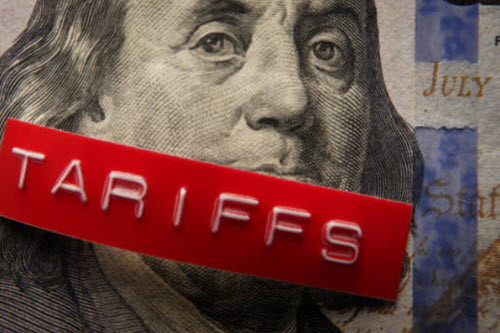
Impact on Business Valuations Tariffs have long served as a tool for national governments to protect domestic industries, correct trade imbalances, or as leverage in international negotiations. This article explores the cascading impacts of recent U.S. tariffs and reciprocal trade barriers on U.S. goods and services. Tariffs have long served as a tool for national governments to protect domestic industries, correct trade imbalances, or as leverage in international negotiations. The United States, as the world’s largest economy, holds a central role in shaping global trade norms. In recent years, particularly following the 2016 presidential election, the U.S. adopted a more…
-
and its Application to Enterprise Valuation The value of a firm must equal the value of the claims on its assets. In practice, this is generally expressed as the value FIRM = value DEBT + value EQUITY. Similarly, in a balance sheet prepared in accordance with generally accepted accounting principles (GAAP), assets = liabilities and equity. By comparison, an economic balance sheet is constructed using market values rather than amounts reported in accordance with GAAP, items included are classified as operating, non-operating, debt or equity-related rather than current or long-term, asset or liability, and it includes economic assets and liabilities…
-
Details Found in IRS Explanation Issued Wednesday; $20,000 Figure Based on a Family of Four. In a final regulation issued Wednesday, January 30, 2013, the Internal Revenue Service (IRS) assumed that under Obamacare the cheapest health insurance plan available in 2016 for a family will cost $20,000 for the year. Under Obamacare, Americans will be required to buy health insurance or pay a penalty to the IRS. The news was reported by Huffington Post, CNS News, Catholic News, Investment Watch, Economonitor, Naked Capitalism, Investor Village, and more. The Journal of Accountancy offered detailed analysis of the new regulations, and NPR weighed in…
-
2013 California Filings: Aetna: 22 percent. Anthem Blue Cross: 26 percent. Blue Shield of California: 20 percent. Reed Abelson at the New York Times reported last week that health insurance companies across the country are seeking and winning double-digit increases in premiums for some customers, even though one of the biggest objectives of the Obama administration’s health care law was to stem the rapid rise in insurance costs for consumers. More:
-
Intent: Not to Constrain Economic Growth Which Could Lead to Future Revenues David Lawder and Kim Dixon report that The Congressional Budget Office on Tuesday said Senate-passed legislation to avert the “fiscal cliff” would add nearly $4 trillion to federal deficits over a decade, largely because it would extend low tax rates for almost all Americans.
-
CBO Details Penalties For Being Uninsured Under The Patient Protection And Affordable Care Act The non-partisan Congressional Budget Office recently reported an estimated six million people would be subject to the Obamacare tax, approximating $7 billion in taxes in 2016 with each of the 6 million people paying at least $695.
-
The U.S. likely will fall back into recession if scheduled spending cuts take effect and Bush-era tax cuts are allowed to expire this year, the Congressional Budget Office said. If the U.S. falls off this “fiscal cliff,” the economy will probably contract 1.3% in the first half of 2013, the CBO said. CNN Financial Times / Alphaville New York Times NPR Reuters USA Today Wall Street Journal Yahoo! Finance Is there an upside? Depends if you like disco. Styx’s Tommy Shaw: “Around ’75 when the recession hit, club owners started going to disco because it was cheaper…